Custom AI Fleet Management System Cost USA: 2026 Guide to Budget & ROI
Custom AI fleet management system cost in the USA. See 2026 pricing, ROI projections, and a 5-year budget comparison. Save fuel, cut downtime, and own your data.
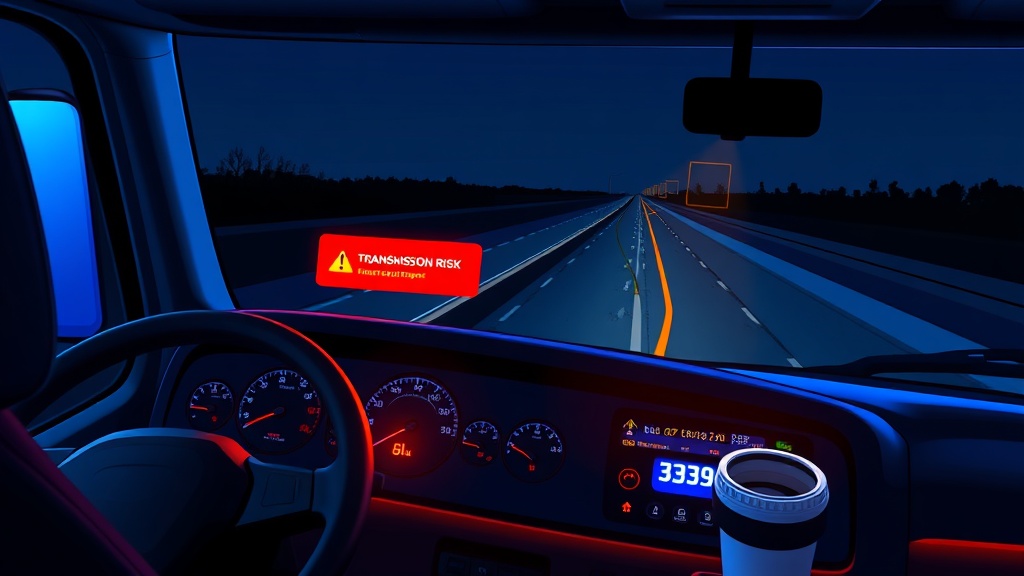
Every fleet manager knows the feeling. A truck stranded on I-10 with a transmission failure that should have been predicted. A routing error that burned an extra 50 gallons of diesel. These aren't just operational headaches—they're profit killers. The fix isn't buying another off-the-shelf telematics platform. It's building a custom AI fleet management system that learns your operations and predicts problems before they drain your bottom line.
But here's the real question: How much does a custom AI fleet management system cost in the USA?
This guide breaks down development costs, builds a realistic ROI model, and provides a decision framework to determine whether building is the right move for your fleet.
---
Why the "Sticker Price" of Custom AI Software Misleads Fleet Owners
Fleet owners evaluating the cost of custom AI software for logistics almost always make the same mistake. They compare a one-time development fee against a monthly SaaS subscription and assume the subscription is cheaper. That comparison ignores Total Cost of Operations (TCO) over multiple years.
> What is the real cost comparison between custom AI and SaaS telematics over five years? When you factor in recurring SaaS fees versus one-time development with owned IP, a 200-truck fleet spending $50–$150 per vehicle per month on SaaS pays $120,000–$360,000 annually. Over five years, that's $600,000–$1.8 million with zero ownership. A custom system at $100,000–$500,000 upfront, with maintenance at 15–20% of development cost annually, typically breaks even in year three.
Here's a reality check. A typical SaaS telematics platform charges $50–$150 per vehicle per month. For a 200-truck fleet, that's $120,000–$360,000 per year in recurring fees. Over five years, you've spent $600,000–$1.8 million—and you own nothing. You're stuck with the vendor's feature set, data structure, and upgrade timeline.
A custom AI system costs $100,000–$500,000 upfront. You own the intellectual property. You control the roadmap. You pay only for ongoing maintenance (typically 15–20% of development cost annually). The math flips in year three.
Estimated ROI: A custom system can deliver 3x higher Net Present Value (NPV) over five years compared to off-the-shelf telematics. That upfront "sticker price" tells only part of the story. The real number is TCO—and custom wins for fleets with scale and complexity.
---
The Cost Breakdown: What Goes Into Custom AI Fleet Management Software Development?
A custom AI fleet management software development project involves multiple specialized components, each with its own cost drivers. Here's what you're paying for with a fleet of 50–500 vehicles:
| Feature Module | Cost Range | What Drives the Cost |
|---|---|---|
| Route Optimization (AI + Real-Time Traffic APIs) | $40,000–$80,000 | Continuous ML model tuning and integration with live traffic data |
| Predictive Maintenance (ML on Sensor Data) | $50,000–$100,000 | IoT hardware integration + historical failure data labeling |
| Driver Monitoring (AI Vision + Compliance) | $60,000–$120,000 | High liability; must comply with DOT/FMCSA regulations and handle dash-cam video |
| ELD, ERP, and Fuel Card Integrations | $30,000–$70,000 | Cost scales with number of legacy systems and API complexity |
| Dashboard & Admin UI | $30,000–$60,000 | Custom analytics views, role-based access, reporting |
| Mobile App (Driver + Manager) | $40,000–$80,000 | iOS/Android native or cross-platform development |
Estimated ROI: A $50,000 investment in predictive maintenance modules typically cuts unplanned downtime by 25–40%. For a fleet averaging $100,000 per year in breakdown-related losses, that's $25,000–$40,000 in annual savings from one module alone.
According to industry research, fleets that implement AI-driven predictive maintenance alongside condition-based monitoring (using sensor anomaly detection and usage pattern analysis) see faster payback than those relying solely on traditional telematics alerts.
---
How to Build an AI Fleet Management System: Architecture and Timeline
Understanding how to build an AI fleet management system is essential for realistic budgeting. A phased, MVP-first approach minimizes financial risk and proves value early.
Phase 1: Data Architecture and Ingestion (Months 1–2)
This is the foundation. Your AI system is only as good as its data pipeline. This phase connects GPS trackers, ELD devices, engine telematics (J1939/CAN bus), and fuel card systems. A data engineering team normalizes all these streams into a unified schema. Cost: $40,000–$70,000.
Phase 2: Core ML Model Development (Months 3–4)
This is where the intelligence lives. Data scientists build predictive models for maintenance failures, optimal routing, and driver behavior scoring. They train models on your historical data and validate them against real-world outcomes. Cost: $80,000–$150,000.
Phase 3: UI/UX and Integration Testing (Months 5–6)
The final sprint builds the driver dashboard, manager console, and mobile apps. A QA team stress-tests integrations and security. Cost: $60,000–$100,000.
Estimated ROI: A phased, MVP-first approach reduces initial cash outlay by 30–40% and lets you prove value—like 15% fuel savings—before scaling to advanced modules.
> What is the ideal development timeline for a custom AI fleet system? An MVP phase takes 4–6 months, with full deployment including advanced modules taking 6–12 months total. Following an established methodology like Deming's PDCA cycle (Plan-Do-Check-Act) for iterative improvement helps teams validate each phase before committing to the next.
---
AI Fleet Management vs Traditional Telematics: A Feature-by-Feature Comparison
When you're comparing AI fleet management vs traditional telematics, the difference isn't incremental. It's fundamental. Traditional telematics answers "what happened." AI answers "what will happen and why."
| Capability | Traditional Telematics | AI Fleet Management |
|---|---|---|
| Reporting | Historical (where was the truck when it broke down) | Predictive (transmission failure probability in 500 miles) |
| Driver Behavior | Basic logging (speeding, idling) | Real-time coaching and risk scoring |
| Route Planning | Static GPS maps | Dynamic load balancing with live traffic, weather, and driver hours |
| Maintenance | Pre-set intervals (every 10,000 miles) | Condition-based prediction (sensor anomaly + usage pattern) |
| Cost Structure | High fixed SaaS fee per vehicle | High variable ROI (cost recouped through savings) |
Drawing on established lean methodology principles, industry practitioners report that applying Taiichi Ohno's seven wastes (muda) framework to fleet operations—particularly defects (breakdowns), waiting (downtime), and excess motion (inefficient routes)—helps organizations identify where AI-driven predictions deliver the greatest cost reduction.
---
The True Cost of Custom AI Software for Logistics in 2026
To accurately assess the cost of custom AI software for logistics, you must look beyond the base development figure. The total investment encompasses several layers that vary significantly based on your fleet's specific needs.
The core development cost for a mid-range system targeting 50–500 vehicles typically falls between $100,000 and $500,000. However, the real picture includes data preparation, cloud infrastructure, third-party API fees, and ongoing model retraining. Data complexity is the primary cost driver—fleets with diverse vehicle types, multiple depot locations, and varied cargo require more sophisticated algorithms and more extensive integration work. The number of external system connections (ELD providers, ERP platforms, fuel card networks) also directly impacts the total cost, with each integration adding $5,000–$15,000 on average.
For most US logistics operations, a fully featured system including all major modules lands between $250,000 and $500,000. This range covers the full scope: development, deployment, and the first year of maintenance and optimization.
---
Estimating Your ROI: Fuel, Maintenance, and Labor Savings (with Examples)
The ultimate question: Does the custom AI fleet management system cost USA make sense for your operation? Let's run the numbers on a realistic scenario.
The 100-Truck Example
Investment:
- Mid-range custom system: $250,000
- Deployment and training: $30,000
- First-year maintenance: $40,000
- Total first-year outlay: $320,000
Annual Savings Breakdown:
| Category | Savings Rate | Annual Savings |
|---|---|---|
| Fuel (AI route optimization) | 8% reduction | $60,000 |
| Maintenance (predictive detection) | 20% reduction | $40,000 |
| Labor/Admin (automated dispatching, compliance) | 15% reduction | $30,000 |
| Total Annual Savings | $130,000 |
USA Context Matters: These savings are grounded in US-specific conditions. Fuel savings reflect EIA average diesel prices ($3.50–$4.00/gal). Maintenance savings account for US repair labor rates. Labor savings factor in the ongoing driver shortage and retention costs unique to American logistics.
For an AI fleet management solution for US logistics, these numbers are conservative. Many clients see higher savings in their first year as AI models improve with more data.
---
How to Choose an AI Development Partner for Your Fleet in the USA
Choosing a fleet management AI development company matters as much as the technology itself. A partner who understands US-specific regulations and operational realities will save you months of rework.
Must-Have Qualifications
- US ELD/DOT/FMCSA Compliance Experience: Your system must integrate with FMCSA-mandated electronic logging devices and handle hours-of-service rules correctly. A partner without this knowledge will build something that gets your fleet fined.
- Proven ML and Real-Time Data Pipeline Track Record: Ask for case studies involving sensor data, GPS streams, and live traffic APIs. The ability to process and act on data in seconds—not minutes—is non-negotiable.
- Strong Data Security Protocols: SOC 2 Type II certification or equivalent demonstrates commitment to protecting your operational data. Your routing patterns, maintenance schedules, and driver data are competitive intelligence.
- Transparent, Phased Development Approach: Avoid firms that offer a "black box" solution with vague timelines. A good partner proposes a phased roadmap with clear milestones, deliverables, and budget checkpoints.
---
Is Custom AI Right for Your Fleet? A Decision Framework
Not every fleet should build from scratch. Here's a framework to evaluate objectively.
You Should Build If:
- You operate 50+ vehicles with mixed route types
- Your operations involve complex variables (multiple depots, time-sensitive deliveries, temperature-controlled cargo)
- You want a competitive advantage through proprietary data and algorithms
- Your IT team has capacity to manage a vendor relationship
- You plan to scale the fleet by 20% or more in the next three years
You Should Buy If:
- Your fleet is small (under 20 vehicles) with stable, predictable routes
- You need basic tracking and compliance reporting only
- You have no internal technical capability and no desire to develop it
You Should Start with a Prototype If:
- You're unsure about specific ROI but convinced AI has potential
- You want to prove the model on a subset of vehicles before full investment
- You need board-level buy-in and want data to support the case
---
Frequently Asked Questions
Q: How much does a custom AI fleet management system cost in the USA?
A: $100,000 to $500,000+, depending on feature scope (predictive maintenance, driver monitoring) and integration complexity. A fully featured system for a 50–500 vehicle fleet typically lands in the $250,000–$500,000 range.
Q: What is the difference between AI fleet management and traditional telematics?
A: Traditional telematics is reactive, reporting past events like location and speed. AI is predictive, forecasting maintenance failures, optimizing routes in real-time, and providing driver coaching based on risk scores.
Q: How long does it take to build a custom AI fleet system?
A: A minimum viable product (MVP) phase typically takes 4–6 months, with full deployment and advanced modules taking 6–12 months. A phased approach delivers value sooner.
Q: What is the ROI of a custom AI fleet management system?
A: For a 100-truck fleet, estimated annual savings of $130,000+ (fuel, maintenance, labor) provide a payback period of under 2.5 years. Cumulative savings over five years typically exceed $650,000.
Q: Do I need IoT hardware for a custom AI fleet system?
A: Yes, most systems require GPS trackers, ELD devices, and engine telematics sensors (J1939/CAN bus). Your AI development partner can recommend compatible hardware that integrates with your system.
Q: Is a custom AI system compliant with DOT and FMCSA regulations?
A: Yes, if built correctly. Your development partner must have proven experience with FMCSA-mandated electronic logging devices, hours-of-service rules, and data retention requirements.
---
Final Thoughts
The custom AI fleet management system cost USA—typically $250,000–$500,000 for a complete system—isn't an expense. It's an investment with a demonstrable return. For a 100-truck fleet, annual savings of $130,000 or more deliver payback in roughly two years, after which the system generates pure profit while reducing downtime, fuel waste, and administrative overhead.
Building isn't just about having the budget. It's about having the vision to invest in a system that grows with your fleet, adapts to your operations, and gives you a data advantage that off-the-shelf products can't match. The upfront investment is significant, but the long-term competitive advantage—proprietary data, tailored algorithms, and complete control over your roadmap—makes it a strategic decision, not just a cost center.
To get started, audit your fleet's data readiness, define your top three pain points (fuel, maintenance, or compliance), and interview at least three development partners with US logistics experience. The right system will pay for itself faster than you think.