How to Build an AI Fleet Driver Behavior Monitoring System (2026 Guide)
Build an AI fleet driver behavior monitoring system that prevents accidents and lowers costs. Learn how to detect fatigue, distraction, and unsafe driving in real time.
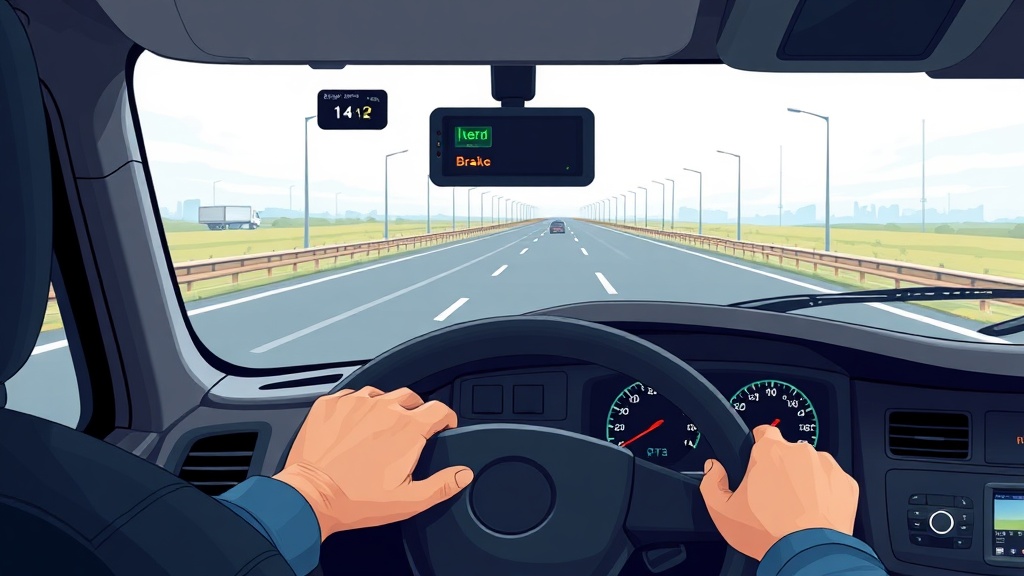
The average tractor-trailer accident costs over $70,000 according to FMCSA data. For a fleet operating 50 trucks, just three accidents per year represents a $210,000 liability — and that's before factoring in insurance premium increases, downtime, and driver replacement costs. Traditional fleet management has treated safety as a reactive expense, reviewing dashcam footage after incidents occur. But the economics of modern logistics demand a different approach.
An AI fleet driver behavior monitoring system shifts the paradigm entirely, turning safety from a cost center into a profit driver by preventing accidents before they happen. Fleets implementing these systems consistently report 20-30% reductions in accident rates and measurable improvements in fuel economy.
What Is an AI Fleet Driver Behavior Monitoring System?
An AI fleet driver behavior monitoring system is a technology platform that uses computer vision, machine learning models, and edge computing to detect and prevent unsafe driving behaviors in real time. Unlike traditional dashcams that simply record footage for later review, these systems actively analyze driver actions as they happen — identifying distraction, fatigue, aggressive driving, and phone use the moment they occur.
This technology represents a significant evolution in fleet safety. The industry moved from basic dashcams (record only), to telematics (GPS and basic diagnostics), and now to AI-powered behavior monitoring. The critical distinction is that AI systems don't just document events — they prevent them by delivering real-time in-cab alerts and automated coaching interventions.
The estimated ROI is substantial. Beyond the 20-30% accident reduction, fleets see 5-15% fuel savings from smoother driving habits encouraged by continuous feedback. Insurance companies increasingly offer 10-25% premium discounts for fleets with active AI monitoring programs. As outlined by the U.S. Department of Energy, smoother driving behaviors can directly lead to significant fuel economy improvements, making this shift from reactive to proactive safety indispensable for modern fleets.
> What is the primary benefit of an AI fleet driver behavior monitoring system? An AI fleet driver behavior monitoring system actively prevents accidents by detecting and alerting drivers to unsafe behaviors like fatigue, distraction, and aggressive driving in real time. This proactive approach consistently reduces accident rates by 20-30% and improves fuel economy, turning fleet safety from a reactive cost center into a proactive profit driver.
Why Traditional Dashcams Aren't Enough
Traditional dashcams record events but cannot prevent them, and that single limitation defines why the AI vs dashcam driver monitoring comparison is not a fair one. Dashcams are passive tools that require someone to manually review hours of footage after something has already gone wrong. They cannot detect driver fatigue, track eye closure, identify phone use, or distinguish between a safe glance at a mirror and a dangerous distraction.
Here is the practical difference:
| Feature | Traditional Dashcam | AI Monitoring System |
|---|---|---|
| Real-time alerts | ❌ | ✅ |
| Fatigue detection | ❌ | ✅ |
| Phone use detection | ❌ | ✅ |
| Automated coaching | ❌ | ✅ |
| Accident exoneration footage | ✅ (plus behavioral context) | ✅ |
The cost math is straightforward. FMCSA data shows the average large truck crash costs $70,000 or more. A 50-truck fleet typically experiences 3-5 preventable incidents per year. An AI monitoring system deployed across that fleet pays for itself in 3-6 months through accident avoidance alone, before accounting for insurance discounts and fuel savings.
How AI Monitors Driver Behavior in Real Time
AI monitors driver behavior by using inward-facing cameras paired with computer vision models that analyze eye movement, head position, and hand placement in real time. Understanding how to monitor driver behavior with AI starts with the technology stack: computer vision algorithms process video frames continuously, convolutional neural networks (CNNs) identify objects and postures, and long short-term memory (LSTM) models track sequences of behavior over time to detect patterns.
How does the AI actually monitor behavior? The system tracks multiple signals simultaneously:
Eye tracking measures blink rate and eyelid closure using the PERCLOS metric (Percentage of Eyelid Closure over time), which research has validated as the most reliable indicator of drowsy driving. Head position analysis detects nodding, dropping, or drifting — all precursors to microsleep events. Hand placement monitoring identifies phone use, eating, smoking, and other distractions. Vehicle dynamics analysis captures harsh acceleration, hard braking, speeding, and following distance violations.
The critical architectural choice is edge computing. All processing happens on-device in the vehicle, meaning no cloud latency and full functionality even in low-connectivity areas. Raw video never leaves the vehicle unless a specific event triggers upload for review. This preserves driver privacy while enabling real-time response.
When the system detects a risk event, it responds immediately with in-cab audio alerts, haptic feedback through the seat, or both. Simultaneously, the fleet manager receives a notification through their dashboard. Review time drops by approximately 80% — instead of watching hours of footage, managers review only AI-tagged events with behavioral context already attached.
The system doesn't just see what the driver does — it understands the context, distinguishing between a yawn (fatigue risk) and a glance at a mirror (safe behavior). This contextual intelligence eliminates the false positives that plagued earlier monitoring systems and builds driver trust.
> How does AI technology differentiate between risky and safe driving behaviors? The AI uses advanced contextual intelligence to distinguish between dangerous actions (like a prolonged glance downward for a phone) and safe actions (like a quick check of a side mirror). By analyzing sequences of behaviors rather than single actions, the system drastically reduces false alarms while accurately flagging true risks.
The ROI: Preventing Accidents & Lowering Insurance Costs
While the cost of custom AI fleet monitoring software varies by fleet size and complexity, the return on investment is demonstrable through accident reduction, fuel savings, and insurance premium discounts. Rather than asking "what is the price tag?" fleet managers should calculate "what is the cost of not having it?"
Quantified savings from real-world fleet data:
- Accident reduction: 20-30% decrease in preventable incidents (VTTI and NETS studies)
- Average accident cost: $70,000+ per large truck crash (FMCSA)
- Fuel savings: 5-15% improvement from smoother driving behaviors (US Department of Energy)
- Insurance discounts: 10-25% premium reductions for fleets with active AI monitoring (industry reports)
Consider a concrete example. A 50-truck fleet experiencing three preventable accidents per year faces $210,000 in direct accident costs annually. An AI monitoring system for this fleet represents a typical investment of $200-$500 per vehicle per year including hardware — or $10,000-$25,000 annually. The accident reduction alone covers the system cost within 4-6 months. Add insurance discounts of 15% on a $100,000 annual premium ($15,000 savings) and 10% fuel savings on $500,000 annual fuel spend ($50,000 savings), and the ROI becomes compelling even in the first year.
The question shouldn't be "How much does it cost?" but "How much does not having one cost?" — and by that measure, the answer is clear.
Building vs. Buying: Why Custom Solutions Win
Custom AI fleet safety solutions win over off-the-shelf options because they integrate with your existing tech stack, adapt to your specific operational needs, and scale without per-truck licensing fees. Off-the-shelf SaaS products present fundamental limitations for fleets with unique operations.
Off-the-shelf limitations:
- Per-truck pricing that spikes as fleets scale, with costs compounding annually
- Limited or no integration with existing telematics platforms (Geotab, Samsara, Motive)
- One-size-fits-all detection rules that don't account for fleet-specific risk patterns (refrigerated vs. dry van, hazmat, passenger transport, last-mile delivery)
- No IP ownership — you pay forever and own nothing
Custom solution advantages:
- Deep API integration with existing systems — no rip-and-replace required
- Tailored detection rules calibrated to your fleet's specific operational risks
- No per-seat licensing fees after development
- Full IP ownership with ability to modify and extend the system
The 3-year cost comparison is revealing. Off-the-shelf SaaS for a 100-truck fleet at $300/truck/year totals $90,000 over three years with zero customization and zero ownership. A custom system built specifically for that fleet typically runs $60,000-$80,000 one-time, includes full integration, and delivers IP ownership that can be leveraged across the organization.
For fleets with unique operational requirements — and what fleet doesn't have them? — custom solutions aren't a luxury; they're the most cost-effective path. A custom development partner like Clearframe Labs builds a system that molds to your fleet, not the other way around.
Key Features of a High-Performance System
A high-performance real-time driver fatigue detection system is the cornerstone of any effective AI behavior monitoring platform, using eye tracking and head position analysis to detect microsleep events before they cause accidents. But fatigue detection, while critical, is just one component of a comprehensive system.
Must-have features:
Real-time fatigue detection: The gold standard uses PERCLOS metrics to measure eyelid closure over time. Modern systems achieve 90-95% accuracy in detecting fatigue events with false positive rates below 2% when properly tuned. Head nodding detection catches the physical signs of falling asleep at the wheel.
Distraction detection: Identifies phone use (hand to ear, device in lap, texting), eating, drinking, smoking, and extended passenger interaction. These distractions account for a significant portion of preventable collisions.
Aggressive driving detection: Monitors harsh acceleration, hard braking, rapid lane changes, speeding, and following distance violations. These behaviors not only increase accident risk but also reduce fuel economy by 15-30%.
In-cab coaching: Delivers immediate audio or haptic feedback when risky behavior is detected. Advanced systems use voice AI to provide coaching messages: "Your following distance has decreased. Please increase space to the vehicle ahead."
Automated reporting and scoring: Generates driver safety scores based on behavior patterns, tracks improvement over time, and identifies drivers who need additional coaching. Fleet managers receive trend analysis and actionable recommendations.
Each feature works together to create a system that doesn't just detect bad behavior — it prevents it.
Integrating AI with Your Existing Fleet Tech Stack
The most common question fleet managers ask is whether an AI behavior monitoring system will work with their existing telematics platform, and the answer is yes — when built correctly. Integration is not an afterthought; it is the foundation of a system that delivers real operational value.
Common integration points:
Telematics platforms like Geotab, Samsara, Motive (formerly KeepTruckin), and Verizon Connect all offer robust APIs that custom systems can connect to directly. ELD providers, maintenance tracking software, and dispatch systems can also be integrated into a unified data flow.
A properly built integration works through API-based data synchronization. The AI system receives vehicle location, speed, and status data from the telematics platform. It enriches that data with behavioral insights (driver fatigue score, distraction events, coaching interventions) and sends the combined dataset back to the telematics dashboard. Your dispatchers see everything in one place — location, hours of service, driving behavior, and vehicle health.
The benefits of good integration are significant: no double data entry, unified driver scores that combine safety and compliance metrics, and automated event tagging across systems. A properly integrated system doesn't add complexity — it consolidates it. Your dispatcher opens one dashboard that shows everything.
Custom-built systems can integrate with virtually any modern telematics platform through APIs, ensuring you don't have to replace your existing investments.
Getting Started: How This Works for Your Fleet
Getting started with AI fleet management for logistics companies in the USA involves a three-phase process: discovery, build, and integration. The path from initial conversation to active deployment typically takes 8-12 weeks, depending on fleet complexity and hardware requirements.
1. Phase 1: Fleet Assessment — A discovery call to understand your fleet size, operational patterns, current telematics infrastructure, and specific safety pain points. A hardware audit identifies camera placement needs and connectivity requirements. Integration mapping documents your existing tech stack and API availability.
2. Phase 2: Custom Build — AI models are trained on your fleet's specific risk patterns and operational context, not generic data. Hardware is selected and configured for your vehicle types. Detection rules are calibrated to minimize false positives in your specific operating environment.
3. Phase 3: Integration and Launch — API connections to your existing systems are established. The unified dashboard is configured. Drivers receive training on how the system works and how it protects them (coaching, not surveillance). The system goes live with a monitoring period to validate performance and tune detection parameters.
For US-based fleets, specific attention goes to DOT compliance, Hours of Service integration, and FMCSA regulatory alignment. The system should support your compliance efforts, not complicate them.
Clearframe Labs specializes in AI fleet management for logistics companies USA, building systems that fit your specific regulatory and operational landscape. This ensures full compliance while delivering systems that match your unique operations.
Frequently Asked Questions
Will an AI monitoring system make my drivers quit?
Practitioners report that turnover is lower in fleets with AI monitoring when the system is positioned as a safety tool, not a surveillance tool. Drivers appreciate having a "co-pilot" that helps them stay safe and provides evidence to exonerate them from false claims.
Can the system work in areas with poor cellular connectivity?
Yes. Because the AI runs on edge computing (on-device processing), all monitoring and alerts function fully even without an internet connection. Data is stored locally and synced to the cloud when connectivity is restored.
Will this system integrate with my current ELD and telematics?
When built as a custom solution, yes. A custom system integrates via API with major telematics platforms like Geotab, Samsara, and Motive, creating a single dashboard that unifies driver scores, compliance data, and vehicle health.
How long does it take to see a return on investment?
Fleet data and industry research suggest that most fleets recover their investment within 3-6 months through accident reduction, fuel savings, and insurance discounts alone.
What happens if a driver refuses to use the system?
Most fleets implement AI monitoring as part of a broader safety policy and driver agreement. When drivers understand the system is designed to protect them — not punish them — and that it provides exonerating evidence in accidents, acceptance rates are very high. Industry data shows over 90% driver adoption when the system is introduced with proper communication and training.
How does the system handle driver privacy concerns?
By design, edge computing keeps all raw video footage on the device inside the vehicle unless a specific risk event triggers upload for review. This means the system is not constantly recording or transmitting video — it is only alerting on detected behaviors. This approach balances safety with privacy andhas been shown to increase driver acceptance rates significantly.
Common Challenges in Implementation and How to Overcome Them
Any fleet deploying an AI behavior monitoring system will face predictable hurdles, and anticipating them is the difference between a smooth rollout and a stalled initiative. Driver resistance tops the list — the fear of being watched constantly can undermine adoption before the system even goes live. The solution is transparent communication: frame the system as a coaching tool that protects drivers from false accident claims and provides exonerating evidence in the event of a collision.
False positives represent another common challenge, particularly during the first weeks of deployment. The system may flag a driver rubbing their eyes as a fatigue risk or a quick mirror check as a distraction. These early inaccuracies erode trust quickly. Mitigate this with a 2-4 week tuning period during which the AI learns the specific behavioral patterns of your fleet. During this period, managers review all alerts manually and adjust detection thresholds based on real-world observations.
Hardware reliability in harsh environments is a third concern. Cameras mounted in fleet vehicles face extreme temperatures, vibration, and dust. Specifying industrial-grade components with IP67 ratings and wide operating temperature ranges (-30°C to 70°C) prevents hardware failures. Edge computing devices should include backup batteries and crash-protected storage to ensure data integrity even in severe accidents.
Finally, data overload can overwhelm fleet managers who suddenly face hundreds of alerts daily. A well-designed system prioritizes alerts by severity level, automatically filters low-risk events, and surfaces only actionable items to the dashboard. This turns the data stream into a manageable workflow rather than a firehose of notifications.
The Future of AI Fleet Safety (2026 and Beyond)
The trajectory of AI in fleet safety points toward increasingly autonomous intervention capabilities. In 2026, several emerging trends are reshaping how fleets approach driver behavior monitoring. Predictive analytics is moving beyond simple real-time alerts to forecast driver fatigue events hours in advance by analyzing circadian rhythms, shift patterns, and historical behavior data. A system that tells a dispatcher "Driver 47 has an 85% probability of a fatigue event between 2:00 PM and 3:00 PM" enables proactive rest scheduling before the risk materializes.
Multi-modal sensor fusion is another frontier. Combining inward-facing cameras with outward-facing sensors — radar, lidar, and vehicle-to-vehicle (V2V) communication — creates a 360-degree safety picture. The system doesn't just monitor the driver; it understands the full context of a near-miss, incorporating external factors like road conditions, traffic density, and weather into its risk calculations.
Natural language processing (NLP) is personalizing the in-cab coaching experience. Instead of generic alerts, the AI will deliver context-aware, driver-specific guidance: "Maria, I noticed you've been driving for seven hours with only one break. The nearest rest area is 12 miles ahead." This conversational interface increases driver engagement and reduces the "alarm fatigue" that plagues systems using standardized beeps and chimes.
Insurance telematics programs are tightening the link between behavior data and premiums. By 2027, most major commercial insurers will require active AI monitoring for preferred rate tiers, making this technology not just an operational advantage but a competitive necessity.
Conclusion
An AI fleet driver behavior monitoring system is no longer an experimental investment — it is a proven operational tool that reduces accidents by 20-30%, cuts fuel costs by 5-15%, and unlocks insurance premium discounts of 10-25%. The question facing fleet managers in 2026 is not whether to adopt this technology, but how quickly they can integrate it into their existing operations.
Traditional dashcams provided only after-the-fact evidence. Modern AI systems provide real-time prevention. The difference is measured in lives saved, accidents avoided, and dollars kept on the bottom line. For fleets still operating with passive recording or reactive safety programs, every day without AI monitoring is a day of preventable risk.
The path forward is clear: assess your fleet's specific needs, build or buy a system that integrates with your existing tech stack, and deploy with a focus on driver communication and continuous tuning. The fleets that make this transition now will not only see immediate financial returns — they will build the safety culture that defines industry leadership for the next decade.