Custom AI Assistants for Enterprise New York: Off-the-Shelf vs. Custom in 2026
Compare off-the-shelf vs. custom AI assistants for New York enterprises. See which architecture meets NYDFS 500, SHIELD Act, and legacy integration needs.
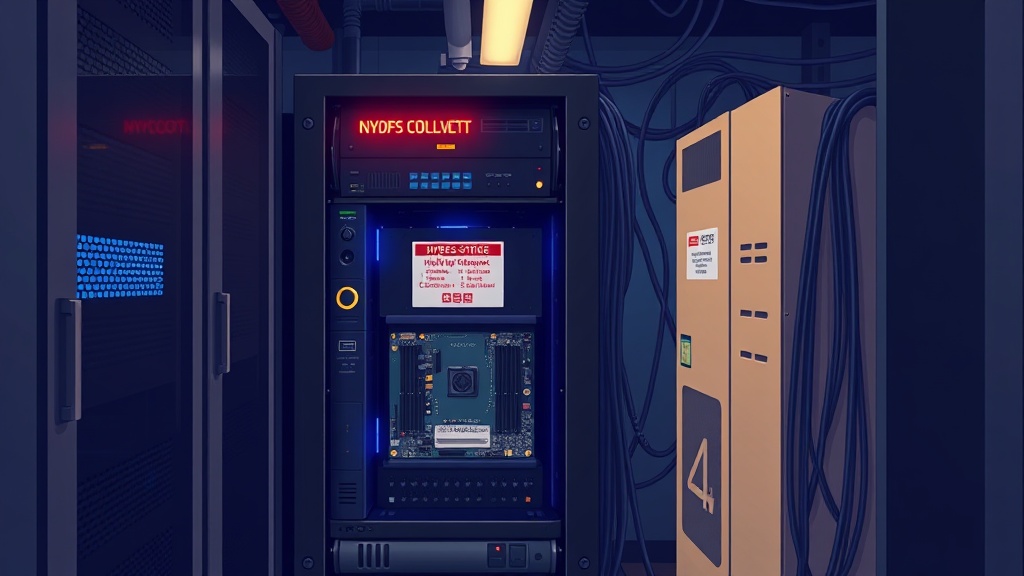
New York enterprises have reached a pivotal moment in 2026. AI assistant tools are everywhere, but many organizations are discovering that off-the-shelf solutions buckle under the city's unique pressures: regulatory red tape, creaky legacy systems, and cutthroat competition. The real tension sits between speed-to-value and long-term strategic fit. This article compares off-the-shelf and custom AI assistants for enterprise New York across cost, compliance, capability, and ROI to help you decide which path aligns with your risk appetite and business goals.
The State of Enterprise AI Assistants in New York
New York enterprises are walking away from off-the-shelf AI. Regulations like NYDFS 500 and the SHIELD Act demand data governance controls that generic AI tools simply can't guarantee. The market has matured: instead of asking whether AI can help, decision-makers now ask which AI architecture fits their specific risk profile.
Three forces are pushing New York's largest organizations toward custom solutions. First, compliance complexity keeps escalating. NYDFS 500 requires financial firms to maintain audit trails, encryption standards, and third-party vendor risk management protocols. Off-the-shelf tools often can't satisfy these requirements without expensive workarounds. Second, legacy system integration remains the single biggest operational hurdle. New York's financial and healthcare institutions run on decades-old core systems that demand API-level integration, not pre-built connectors. Third, competitive differentiation demands it. When every competitor has access to the same ChatGPT or Copilot instance, your AI assistant becomes a commodity rather than an advantage.
Roughly two-thirds of New York-based financial enterprises are currently evaluating or have deployed custom AI solutions. The mindset has shifted from "Can AI help us?" to "Which AI architecture fits our risk posture?" That question determines whether your AI investment drives compliance or creates liability.
Clearframe Labs has deep experience navigating this shift, helping enterprises move from generic AI experiments to production-ready systems that respect New York's regulatory boundaries and operational realities.
> [Should New York enterprises choose off-the-shelf or custom AI assistants?]: For enterprises subject to NYDFS 500, HIPAA, or the SHIELD Act, custom AI assistants are the only viable path that ensures compliance, data sovereignty, and legacy system integration. Off-the-shelf tools work for standardized, low-risk workflows but fail under New York's regulatory and operational complexity.
Comparison Table: Off-the-Shelf vs. Custom AI Assistants
The table below captures the key differences across five dimensions that matter most to New York enterprises.
| Dimension | Off-the-Shelf AI Assistants | Custom AI Assistants |
|---|---|---|
| Time-to-Deployment | 2–6 weeks | 8–16 weeks |
| Cost Structure | $5K–$50K/year (subscription) | $50K–$250K+ (one-time build + maintenance) |
| Compliance Readiness | General (GDPR, basic SOC 2) | NYDFS 500, SHIELD Act, HIPAA by design |
| Integration Complexity | Limited pre-built connectors | Full API-level integration with legacy systems |
| Scalability | Capped by vendor roadmap | Unlimited — grows with your business |
| Estimated ROI (24 months) | 50–100% on subscription cost | 200–400% from workflow automation + compliance savings |
The integration row is equally important. New York's financial and healthcare organizations operate on legacy systems that predate modern API standards. Off-the-shelf tools offer pre-built connectors for popular platforms like Salesforce or ServiceNow, but they rarely connect to proprietary claims processing systems, custom trading platforms, or on-premise data lakes. Custom assistants integrate at the API level, accessing your actual data architecture rather than a sanitized export.
How Do Custom AI Assistants Address New York's Compliance Landscape?
Custom AI assistants address New York's compliance landscape by embedding regulatory logic directly into the model's data governance layer — rather than bolting on compliance after deployment. This architectural difference matters for enterprises subject to NYDFS 500, the SHIELD Act, HIPAA, or FINRA regulations.
NYDFS 500 requires financial institutions to maintain audit trails for all data access, encrypt sensitive information both in transit and at rest, and conduct third-party vendor risk assessments. Off-the-shelf AI assistants typically operate in multi-tenant cloud environments where audit trails are opaque and encryption standards may not align with NYDFS requirements. Custom assistants are built on private infrastructure with granular access controls and full audit logging from day one.
The SHIELD Act mandates specific data breach notification protocols that vary by industry and data type. A custom assistant can automate these notification workflows — identifying a breach, determining the affected data category, and triggering the appropriate notification sequence within mandated timeframes. Off-the-shelf tools lack that contextual awareness.
Data sovereignty is another dealbreaker. New York financial firms increasingly require sensitive data to remain on-premise or in a private cloud environment. Off-the-shelf SaaS models process data on vendor-controlled servers, creating a compliance exposure that many legal teams simply can't accept. Custom AI assistants can be deployed entirely within your infrastructure, ensuring data never leaves your controlled environment.
Enterprises evaluating enterprise AI development services New York should prioritize partners who demonstrate deep familiarity with these regulatory frameworks. A development partner who understands NYDFS 500 audit trail requirements will design a fundamentally different system than one building for general enterprise use. Custom AI agents for enterprise security aren't a product category — they're an architectural choice that starts with compliance requirements and builds upward.
> [What compliance regulations do custom AI assistants address in New York?]: Custom AI assistants are designed to meet NYDFS 500 audit trail and encryption requirements, SHIELD Act breach notification protocols, HIPAA data privacy standards, and FINRA recordkeeping rules — all by embedding compliance into the architecture rather than adding it as an afterthought.
The Real ROI of Custom AI Assistants
The business case for custom AI assistants rests on measurable ROI projections. Industry benchmarks suggest that organizations in compliance-heavy environments can expect 200–400% ROI over 24 months when deploying custom AI assistants. These returns come from three primary sources: workflow automation, compliance cost reduction, and data retrieval efficiency.
AI workflow automation for New York businesses delivers the most immediate impact. Enterprises report 40–60% reductions in manual workflow processing time after deploying custom AI assistants. Consider a New York-based real estate investment firm that automated its tenant screening and lease compliance workflows using a custom AI assistant. Manual processing time dropped by 55%, and compliance-related administrative costs fell by 30%. The assistant now handles document verification, regulatory checklist completion, and lease clause validation — tasks that previously required six full-time compliance specialists.
Compliance cost reduction is the second major ROI driver. Automated audit trails, breach notification workflows, and regulatory reporting generate 25–35% reductions in compliance-related operational costs. For a mid-size financial firm spending $2 million annually on compliance operations, that translates to $500,000–$700,000 in yearly savings. These efficiency gains demonstrate how enterprise AI assistant ROI extends beyond simple task automation into fundamental cost restructuring.
The third ROI driver is cross-system data retrieval efficiency. Custom AI assistants that integrate directly with legacy databases, CRM systems, and document repositories enable 3–5x improvements in information retrieval speed. When an analyst can ask a question in natural language and receive an answer drawn from twelve different systems in under five seconds, the productivity gains compound across every team that interacts with data.
Enterprise AI assistant ROI calculations should account for these three streams — workflow automation, compliance cost reduction, and data retrieval — rather than treating the assistant as a single-function tool. The real value emerges when the assistant touches multiple business processes simultaneously. For real-world examples, see Clearframe Labs' case studies.
How to Build a Custom Enterprise AI Assistant (Step by Step)
Building a custom enterprise AI assistant follows a four-phase process: discovery, design, development, and deployment. Each phase requires active collaboration between business stakeholders and AI engineers. The timeline from inception to production typically spans 12–16 weeks for a focused use case.
Phase 1: Discovery (2–3 weeks) – This phase defines what the assistant will do and why. Key activities include documenting existing workflows, identifying compliance requirements, assessing data readiness, and defining success metrics. The most common mistake enterprises make at this stage? Skipping the compliance audit. If you discover in week 10 that NYDFS 500 requires encryption standards your architecture doesn't support, you'll pay for a rebuild. Discovery surfaces these requirements before any code is written.
Phase 2: Design (3–4 weeks) – Architecture planning begins here. The design phase produces the data model, UX prototypes, API integration map, and compliance-by-design blueprint. This is where decisions about data sovereignty are made: will the assistant run on-premise, in a private cloud, or in a hybrid environment? The design phase also defines the assistant's scope — which workflows it handles autonomously and which require human approval.
Phase 3: Development (6–10 weeks) – Model customization, API integration, security hardening, and compliance testing happen in this phase. Development teams train or fine-tune the underlying model on your proprietary data, build integration layers with your legacy systems, and implement the compliance controls identified in the discovery phase. Testing includes red-teaming for security vulnerabilities and compliance audits against NYDFS, SHIELD Act, or HIPAA requirements.
Phase 4: Deployment and Iteration (ongoing) – Production rollout begins with a controlled pilot group, followed by user training and performance monitoring. The assistant enters a continuous improvement cycle where usage patterns inform model updates, workflow adjustments, and new feature development.
A consultancy like Clearframe Labs manages this entire lifecycle, providing both the strategic guidance and technical execution required to move from concept to production. Clearframe Labs' AI Development service provides end-to-end support across all four phases, from discovery through production deployment.
Why New York Enterprises Choose Clearframe Labs
Among NYC artificial intelligence consulting firms, Clearframe Labs stands out for its specialization in compliance-heavy industries and an end-to-end service model that spans strategy consulting through custom development.
Clearframe Labs is headquartered in Austin, Texas, with service coverage in New York, San Francisco, and across the United States. The firm has built its practice around the specific challenges that make New York enterprises difficult clients for generalist consultancies: NYDFS compliance, HIPAA requirements, SHIELD Act data governance, and the legacy integration complexity that characterizes established financial and healthcare institutions.
Three differentiators set Clearframe Labs apart from larger competitors:
- Deep specialization in healthcare and finance compliance. While generalist firms treat compliance as a checklist item, Clearframe Labs builds compliance into the architecture from day one.
- End-to-end service model. Many firms offer strategy or development but not both, creating handoff risks and knowledge gaps. Clearframe Labs provides strategy consulting, custom development, and ongoing iteration under one engagement.
- Collaborative partnership model. Through its referral partnership with Quantfi, Clearframe Labs extends its capabilities into fintech-specific AI applications, giving New York enterprises access to specialized expertise without juggling multiple vendors.
See Clearframe Labs' approach to enterprise AI consulting on their About page.
When Does Off-the-Shelf Make Sense (And When Doesn't It)?
Off-the-shelf AI assistants make sense when your workflows are standardized, your compliance requirements are general (GDPR-only), and your data doesn't need to remain on-premise. But for most New York enterprises, one or more of those conditions don't apply.
Off-the-shelf works well in three scenarios:
- When internal processes are standardized and match the vendor's pre-built workflows
- When no proprietary data is involved — your AI assistant is processing public information or generic customer inquiries
- When you need a rapid proof-of-concept to demonstrate AI's potential to stakeholders (a four-week deployment can build organizational momentum that justifies a custom build later)
Off-the-shelf fails in four critical scenarios:
- When NYDFS or SHIELD Act compliance is required and the vendor cannot provide audit trails, encryption guarantees, or data sovereignty controls
- When legacy system integration is needed — if your core systems predate modern API standards, pre-built connectors won't help you
- When data sovereignty is non-negotiable and your compliance team requires on-premise deployment
- When your workflows are industry-specific and the vendor's generic templates cannot capture the nuance of real estate due diligence, healthcare claims processing, or financial regulatory reporting
For New York enterprises operating in finance, healthcare, or regulated real estate, the question isn't whether to go custom — it's how quickly you can get there.
Frequently Asked Questions
What is the typical timeline for building a custom enterprise AI assistant?
A focused custom AI assistant takes 12–16 weeks from discovery to production deployment, depending on integration complexity and compliance requirements.
How much does a custom enterprise AI assistant cost?
Custom AI assistant builds typically range from $50,000 to $250,000+ for initial development, with ongoing maintenance costs. This compares to $5,000–$50,000 annually for off-the-shelf subscriptions.
Can a custom AI assistant integrate with my legacy on-premise systems?
Yes. Custom assistants are built with API-level integration layers that connect to proprietary legacy systems, on-premise databases, and custom trading or claims processing platforms — something off-the-shelf tools rarely support.
What ROI should I expect from a custom enterprise AI assistant?
Enterprises in compliance-heavy environments typically see 200–400% ROI over 24 months from workflow automation (40–60% reduction in manual processing time), compliance cost reduction (25–35% savings), and 3–5x faster data retrieval.
Do I need a technical team to maintain a custom AI assistant?
Most enterprises partner with an AI development consultancy for ongoing maintenance, model updates, and performance monitoring. The consultancy manages the technical lifecycle while your internal team focuses on business outcomes.
Which New York regulations affect enterprise AI assistant deployment?
Key regulations include NYDFS 500 (financial services cybersecurity), the SHIELD Act (data breach notification), HIPAA (healthcare data privacy), and FINRA rules (financial recordkeeping). Custom assistants can embed compliance with all of these from day one.
Start Your Custom AI Journey
The choice between off-the-shelf and custom AI assistants ultimately comes down to your compliance requirements, integration complexity, and competitive ambition. Off-the-shelf tools deliver speed for standardized, low-risk workflows. Custom AI assistants deliver compliance, integration, and differentiation for organizations that operate in regulated, complex environments.
For New York enterprises navigating the custom AI decision, Clearframe Labs offers the strategic guidance and technical expertise to build custom AI assistants for enterprise New York that meet your compliance requirements and business goals. Whether you are evaluating a proof-of-concept or ready to begin a full-scale deployment, the right architecture starts with understanding your specific regulatory and operational landscape.