AI-Driven Inventory Demand Forecasting for Logistics: A 2026 Guide for Fleet Managers
Discover how AI-driven inventory demand forecasting for logistics reduces stockouts by 65-80% and cuts carrying costs by 20-50%. A practical 2026 guide for fleet managers.
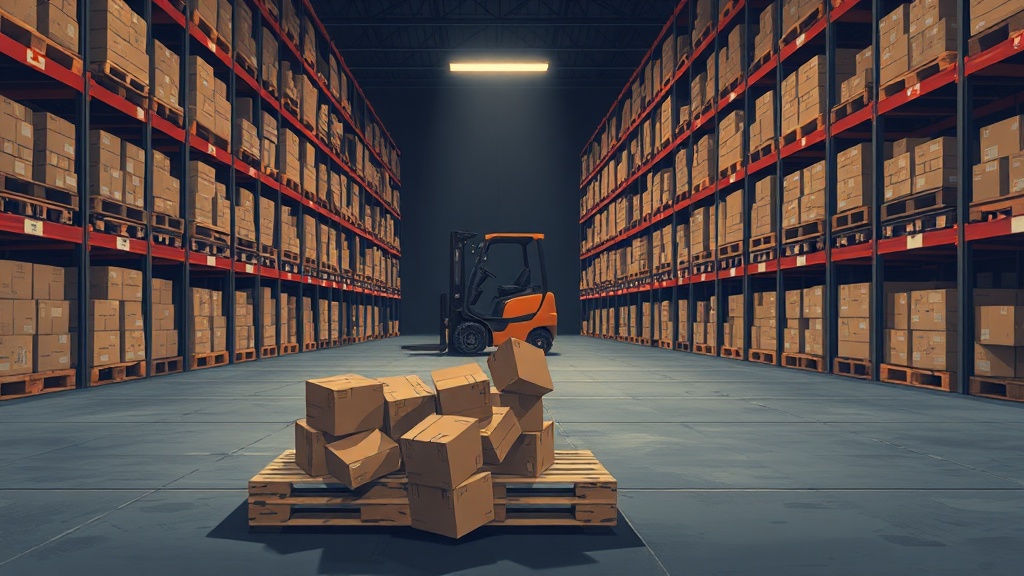
Logistics companies lose an estimated $300,000+ annually per 100 vehicles due to overstocking and emergency orders—a cost that most fleet managers accept as inevitable. But it isn't. Traditional inventory forecasting, built on spreadsheets and gut instinct, keeps you reacting to problems instead of preventing them. AI-driven inventory demand forecasting for logistics changes that equation entirely, transforming fleet operations from reactive to predictive. We'll walk through how this technology works, the real ROI for your fleet, and a practical path to implementation that avoids common pitfalls.
---
The Hidden Cost of Forecasting Blind (The Problem)
Spreadsheet-based forecasting is fundamentally static. It relies on simple averages and linear trends that cannot capture the complexity of real-world logistics operations. When seasonal spikes hit, routes change unexpectedly, or suppliers delay shipments, your forecast becomes a liability.
This is where the bullwhip effect wreaks havoc. A small fluctuation in customer demand—say, a 5% increase in service calls—amplifies into wild swings upstream. Your depot orders 15% more parts to be safe. Your supplier sees that and adds another 20%. Within weeks, you have a warehouse packed with inventory you don't need, while critical parts for a different vehicle line are backordered.
The tangible consequences hit your bottom line directly:
- Emergency freight costs from rush-ordering stockout parts
- Lost revenue when trucks sit idle waiting for replacement components
- Working capital tied up in slow-moving inventory that collects dust
Industry research suggests that these hidden inefficiencies can account for 20-30% of total logistics operating costs, silently eroding margins that could otherwise fund fleet modernization or route expansion.
Machine learning for demand forecasting in logistics is designed to solve exactly this problem. ML models analyze hundreds of variables simultaneously—weather patterns, historical order data, supplier lead times, seasonal demand shifts—and detect patterns that no human staring at a spreadsheet could ever see. The result is a forecast that adapts in real-time, not one that's outdated the moment you finish typing.
> [Why do traditional forecasting methods fail logistics operations?] Traditional spreadsheets cannot process the complexity of real-world logistics. They rely on linear trends and simple averages, missing patterns from weather, supplier delays, and seasonal shifts. This leads to the bullwhip effect, where small demand fluctuations cause massive upstream inventory imbalances.
---
What Is AI-Driven Inventory Demand Forecasting for Logistics? (The Solution)
AI improves inventory accuracy in supply chains by analyzing hundreds of variables—like weather, supplier lead times, and seasonal demand—that spreadsheets simply cannot process at the same scale.
At its core, AI-driven forecasting works by training machine learning models on your historical data. The model ingests years of order histories, shipment records, return logs, and external data sources. It identifies recurring patterns: which parts spike in winter, which routes drive higher consumption, which suppliers are chronically late. Then it makes probabilistic predictions about future demand, with a confidence score for each estimate.
Contrast this with traditional methods. A spreadsheet forecast typically uses a moving average or a simple linear regression based on last year's sales. It treats every month as an isolated event and assumes the past will repeat—predictably. AI models do not assume predictability. They embrace complexity. A model can learn that demand for brake pads rises in November because of pre-holiday fleet inspections, dips in December, and surges again in March when seasonal routes resume.
Here's the critical nuance: AI is not a replacement for your planners. It is a decision-support tool. The best approach is "human-in-the-loop," where the model surfaces recommendations, and the purchase manager validates, adjusts, or overrides based on real-world knowledge. Data quality is the number one prerequisite for this to work—more on that shortly.
---
AI vs. Traditional Forecasting Methods: Which One Wins? (The Comparison)
When you place these two approaches side by side, the differences become stark. Here is how they compare across the dimensions that matter most to fleet operations:
AI vs. traditional inventory forecasting methods—a direct comparison:
| Feature | Traditional Forecasting | AI Forecasting |
|---|---|---|
| Data Handling | Single variable (e.g., last year's sales) | Hundreds of variables (weather, economic indicators, market trends) |
| Accuracy | 40-50% (Gartner) | 85-95% (McKinsey) |
| Adaptability | Manual updates required | Real-time learning and adjustment |
| Bias | Human bias inherent in assumptions | Data-driven, less biased |
| Cost | Low upfront investment | Higher upfront, lower long-term costs |
> [What is the difference between AI and traditional forecasting for fleet inventory?] Traditional forecasting uses static averages and linear trends, achieving 40-50% accuracy. AI forecasting analyzes hundreds of variables in real-time, achieving 85-95% accuracy by adapting to seasonality, supplier behavior, and market shifts.
---
The Real ROI of AI Forecasting for Your Fleet (The Financial Case)
Numbers matter when you're making a capital decision. Let's walk through the AI inventory forecasting ROI for logistics companies with specific, data-backed metrics.
Carrying cost reduction: AI-powered demand forecasting can reduce inventory carrying costs by 20-50%. For a fleet carrying $2 million in inventory, a conservative 25% reduction represents $500,000 in annual savings. That's money freed from warehouse space, insurance, and obsolescence—reinvestable into fleet modernization or growth.
Stockout reduction: AI forecasting reduces stockouts by 65-80%. Fewer stockouts mean fewer emergency freight orders, less vehicle downtime, and higher customer satisfaction. For a fleet of 50 trucks, even a 10% reduction in emergency shipping costs can save $50,000-$100,000 annually.
Cash flow impact: Excess inventory ties up capital that could be working harder elsewhere. AI forecasting lets you reduce safety stock levels with confidence, freeing up working capital. That $500,000 you were holding in unnecessary inventory? It can now fund a new route expansion or upgrade to more fuel-efficient vehicles.
Waste and obsolescence: For parts with expiration dates—oils, filters, tires—over-ordering leads directly to waste. AI forecasting cuts that waste by ordering closer to actual demand, reducing disposal costs and environmental impact.
Here is the estimated ROI calculation in simple terms: For a fleet carrying $2M in inventory, a 25% reduction in carrying costs represents a $500,000 annual savings—well above the investment in custom AI software. Most implementations pay for themselves within the first 12-18 months.
---
Before You Start: The 3-Step Data Prep Checklist (The Implementation Reality)
Custom AI inventory forecasting software for fleets is powerful, but it is only as good as the data you feed it. Skipping this preparation step is the number one reason AI forecasting projects fail. Here is your three-step checklist:
Step 1: Audit your data sources. Identify every system where inventory data lives: your ERP, warehouse management system (WMS), transportation management system (TMS), and even spreadsheets. Ask three questions: Is it clean? Is it consistent? Is it timestamped? If you have duplicate records, missing dates, or inconsistent unit measurements, fix them before anything else.
Step 2: Clean for six months of history. AI models need a minimum of six months of clean, deduplicated, normalized data to learn meaningful patterns. This is not optional. If your data is a mess, your forecasts will be too. Invest the time upfront—it pays dividends.
Step 3: Define your success metric. What does "good forecasting" mean for your operation? Some examples: a stockout rate below 5%, an overstock rate below 10%, or forecast accuracy above 85% for your top 100 SKUs. This metric defines the model's objective and allows you to measure progress objectively. Without it, you cannot tell if your investment is working.
> [What data do I need before implementing AI forecasting?] You need at least six months of clean, deduplicated, timestamped inventory data from your ERP, WMS, or TMS. Without clean data, AI models cannot detect meaningful patterns, and the implementation will likely fail.
---
How a Purchase Manager's Role Changes (The Human Factor)
One of the most common concerns we hear is: "Will AI replace my demand planners?" The short answer is no. The longer answer is that it will transform their role—for the better.
AI inventory optimization for supply chain managers elevates the purchase manager from a reactive order-placer to a strategic optimizer. Following the principles outlined in the Baldrige Excellence Framework—which emphasizes data-driven decision-making and continuous improvement—AI transforms the purchasing function into a strategic asset. Here is how the day-to-day changes:
- Less time on data entry and spreadsheet manipulation. Instead of spending 70% of their day compiling and cleaning data, planners spend 70% of their time analyzing exceptions and making strategic decisions.
- More time on high-value tasks. Exception handling, supplier negotiations, inventory policy adjustments, and collaboration with operations on route planning become the core focus.
- Strategic partnership. Purchase managers become the data-informed voice in leadership meetings, driving cost-saving initiatives and operational innovations rather than just fighting fires.
AI handles the 80% of routine, predictable demand automatically. The human handles the 20% of exceptions: new product launches, unusual demand spikes, supplier disruptions, and strategic decisions about inventory positioning. This is not a threat to job security—it is a promotion out of data entry.
---
How Do You Measure the Success of an AI Forecasting Implementation? (The Metrics)
You measure the success of an AI forecasting implementation by tracking three core metrics: forecast accuracy (MAPE), inventory turnover ratio, and stockout rate.
Mean Absolute Percentage Error (MAPE): This is the gold standard for forecast accuracy. A good target is below 10% for your top-selling SKUs. For context, most spreadsheet-based forecasting runs at 30-50% MAPE. Cutting that in half is a dramatic operational improvement.
Inventory Turnover Ratio: This measures how many times your inventory is sold and replaced over a period. A higher ratio means more efficient stock management. AI should increase this by 20-40% within the first year.
Stockout Rate: The percentage of time a critical part is unavailable when needed. Target: below 2% for A-items (high-value, critical parts). If you were running at 8-10% before AI, cutting that to 2% is transformative.
User Adoption Rate: Even the best model fails if planners do not trust it. Track how often planners override AI recommendations. A high override rate signals a trust or usability issue that needs immediate attention.
Time-to-Decision: Measure the reduction in time planners spend generating forecasts versus acting on them. A shift from 70% analysis and 30% action to 30% analysis and 70% action is a strong success indicator.
---
What Are the Risks of Over-Reliance on AI Forecasting? (The Cautionary Tale)
The primary risk of over-reliance on AI forecasting is that models fail silently when they encounter novel conditions—such as a global supply chain disruption or a sudden shift in customer behavior—that fall outside their training data.
The "Black Box" Problem: Complex ML models can produce predictions that are difficult to explain or audit. A planner who blindly accepts a counterintuitive recommendation without understanding its basis is vulnerable to making costly errors.
Data Drift: Models are trained on historical data. If underlying demand patterns change—a new competitor enters the market, a key supplier goes bankrupt, customer preferences shift—the model's accuracy can degrade without obvious warning signs.
The Cobra Effect: An AI optimized solely to minimize stockouts might recommend absurdly high safety stock levels, defeating the purpose of reducing carrying costs. The model needs guardrails.
The Solution is Human-in-the-Loop: Treat AI as a co-pilot, not an autopilot. Planners must retain the authority to question and override recommendations, especially during unusual events. One practical approach: implement a "confidence threshold" system. If the AI's prediction confidence is below 70%, flag the item for human review rather than auto-generating a purchase order.
> [Can AI forecasting be trusted completely?] No. AI models can fail silently during supply chain disruptions or market shifts that fall outside their training data. The human-in-the-loop approach—where planners review and override low-confidence predictions—is essential to avoid costly errors.
---
Building a Custom AI Forecasting Solution for Your Logistics Company (Next Steps)
By now, the case for AI-driven forecasting is clear. The question becomes: should you buy an off-the-shelf tool or build a custom solution?
Off-the-shelf vs. custom: Generic tools work for about 80% of logistics operations. But for fleets with unique routing, multi-depot networks, or specialized inventory requirements (e.g., temperature-controlled parts, hazmat items), off-the-shelf solutions often fail. They cannot adapt to your specific data structures, operational constraints, or business rules.
Custom AI inventory forecasting software for fleets is built for your operation. It integrates with your existing ERP and WMS. Its models are trained on your unique historical data. Its dashboard is designed for how your planners think. And it includes ongoing model retraining as your business evolves.
What a custom solution looks like:
- Tailored ML models trained on your data
- Seamless integration with your existing systems
- User-friendly dashboard designed for planners
- Automated model retraining on a monthly or quarterly cadence
- A human-in-the-loop workflow for exception handling
This is where a partner like Clearframe Labs can help you build a solution that fits your fleet like a glove, rather than forcing your operations into a generic template. The journey to implementing AI-driven inventory demand forecasting for logistics starts with a single conversation about your data.
---
Frequently Asked Questions About AI Forecasting
How long does it take to implement an AI forecasting system?
Typically 3-6 months for a project with clean data. Add 2-3 months if significant data cleanup is needed.
Can AI handle seasonal spikes in demand?
Yes. Machine learning models are specifically trained to detect and predict recurring seasonal patterns. They can even incorporate external factors like holiday schedules or weather patterns to improve accuracy during volatile periods.
What is the typical ROI timeline for AI inventory forecasting?
Most fleets see a full return on investment within 12 to 18 months. The savings come from reduced carrying costs, fewer emergency shipments, and decreased vehicle downtime.
Do I need a data science team to maintain themodel?
Yes and no. Many vendors offer managed AI services where the vendor handles model training and monitoring. But for highest accuracy and flexibility, an internal data-savvy team or fractional data science support is recommended to oversee retraining and optimization.
Will AI forecasting integrate with my existing TMS or WMS?
Most modern AI forecasting platforms provide API-based integrations with major ERP, TMS, and WMS systems. A custom solution can be built to connect with legacy or proprietary systems that lack standard APIs.
How much data is enough to start?
A minimum of six months of clean, timestamped data is required. More data (2-3 years) improves accuracy significantly, especially for detecting seasonal patterns and rare events.
---
How to Get Started: Your 90-Day Action Plan
If you're ready to move from theory to practice, here is a phased roadmap that de-risks your AI forecasting implementation:
Days 1-30: Discovery and Data Audit
- Assemble a cross-functional team (operations, purchasing, IT, finance)
- Conduct a full data inventory and quality assessment
- Define your success metrics (e.g., MAPE target, stockout rate goal)
- Select a pilot SKU category (ideally 20-30 high-value, medium-variability parts)
Days 31-60: Pilot Model Build
- Clean and normalize six months of historical data for the pilot SKUs
- Build a proof-of-concept ML model using your data
- Run the model in shadow mode (predictions are generated but not acted upon)
- Compare AI predictions against actual demand for 30 days
Days 61-90: Validation and Rollout Planning
- Evaluate pilot accuracy against your baseline (current method)
- Gather planner feedback on model outputs and usability
- If accuracy gains are ≥15%, plan a full rollout by SKU category
- Create a change management plan for your team
---
Conclusion: The Future of Fleet Inventory Management Starts Now
The logistics industry is at an inflection point. Companies that cling to spreadsheet-based forecasting will continue to absorb 20-30% hidden costs from inefficiency. Those that adopt AI-driven inventory demand forecasting for logistics will unlock cash, reduce downtime, and position themselves as leaders in an increasingly competitive market.
Machine learning for demand forecasting in logistics is not a distant technology—it is available today, proven, and accessible to fleets of all sizes. The difference between a fleet that struggles with stockouts and one that runs like a well-oiled machine is not luck. It is the decision to stop guessing and start predicting.
Your next step is simple: pick up that data audit checklist, assemble your team, and take the first step toward a future where your inventory works for you, not against you. The technology is ready. The question is—are you?