AI-driven logistics warehouse automation review
Cut warehouse operating costs by 25–40% with our 2026 AI automation guide. Get a step-by-step ROI model and implementation roadmap for US & Mexico logistics.
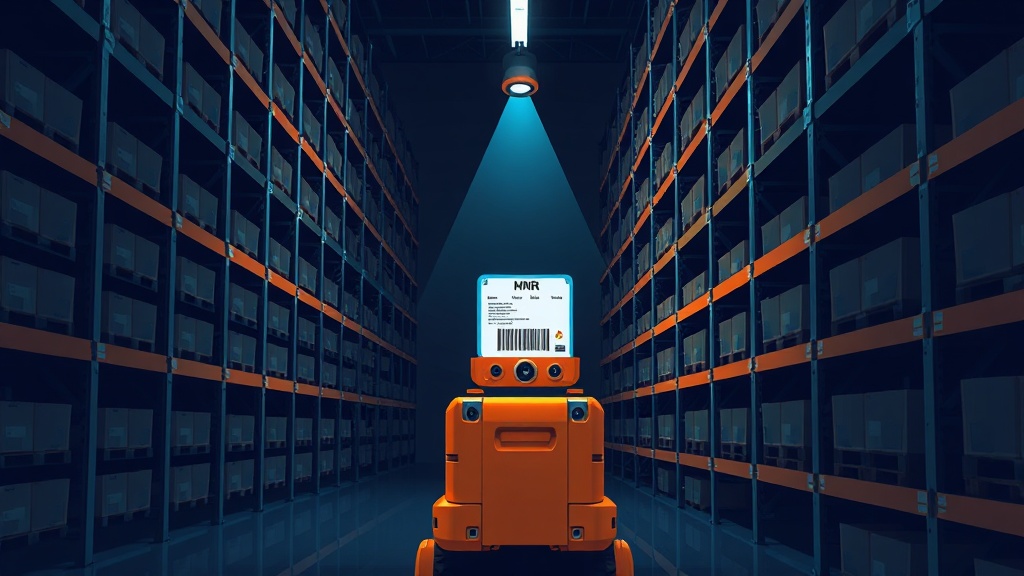
AI-Driven Warehouse Automation: The 2026 ROI Implementation Guide
Razor-thin margins and relentless demand aren't future challenges—they're today's reality. Logistics leaders now treat artificial intelligence less like a futuristic concept and more like a practical tool for survival. Skyrocketing labor costs, punishing error rates, and inflexible legacy systems squeeze profitability from every angle. This guide cuts through the hype to deliver a clear, actionable blueprint for implementing AI-driven warehouse automation, complete with a framework for calculating your specific return on investment. We'll explore the technologies delivering real cost reductions—often cutting operational expenses by 25–40%—the step-by-step path to sustainable implementation, and the critical regional factors for success in the US and Mexico. Whether you're a fleet manager battling inefficiency or a purchasing director under pressure to cut costs, the path to a smarter, more resilient operation starts here.
Why AI Automation Solves Today's Logistics Challenges
Modern warehouses face unprecedented pressure. Labor shortages and wage inflation push costs to unsustainable levels, while customer expectations for next-day delivery and perfect accuracy have never been higher. Every mis-picked item, inefficient travel path, and hour of overtime directly erodes the bottom line. This is where how AI reduces logistics warehouse operating costs shifts from a theoretical advantage to a critical business imperative.
AI-driven automation tackles these pain points head-on by acting as a force multiplier for your existing team. It doesn't simply replace workers; it augments human capability. Intelligent systems optimize labor deployment in real time, directing associates to the most urgent tasks and cutting non-productive travel by up to 60%. Computer vision and machine learning slash picking and packing error rates by identifying discrepancies before an order leaves the building—drastically reducing costly returns and waste. Perhaps most importantly, AI provides the dynamic scalability that rigid, legacy systems lack, allowing operations to flex with demand spikes without a proportional spike in labor costs.
The result is a fundamental reduction in total operating costs. By augmenting the workforce, AI enables a transition where human talent is upskilled to manage, maintain, and optimize these intelligent systems. Teams shift from repetitive, error-prone tasks to higher-value, strategic roles. This approach doesn't just safeguard your operation against labor market volatility; it builds a more engaged and technically skilled team. That sets the stage for the detailed ROI model we'll explore next.
Direct Answer: How AI Reduces Warehouse Operating Costs
AI-driven warehouse automation reduces operating costs by augmenting human labor with intelligent systems that optimize workflows in real-time. By cutting non-productive travel by up to 60% and using computer vision to drastically reduce picking errors, AI directly lowers labor and error-related expenses. Furthermore, its predictive analytics enable dynamic scaling, allowing warehouses to handle demand spikes without proportional increases in labor costs, leading to typical operational expense reductions of 25–40%.
The AI Warehouse Toolkit: From Smart Software to Robotic Arms
Building an AI-powered warehouse means layering intelligent software with precise physical automation. Understanding this toolkit—from the predictive "brain" to the automated "hands"—is key to forming a cohesive strategy that delivers real results.
The Intelligence Core: Predictive Analytics & AI-Powered WMS
The foundation of any smart warehouse is its software intelligence. Modern, AI-driven Warehouse Management Systems represent a quantum leap beyond simple inventory databases. These platforms use machine learning algorithms to analyze historical and real-time data, enabling predictive capabilities that transform operations. This is the domain of the best AI warehouse management software 2026, evaluated on predictive accuracy, integration capabilities, and sheer agility.
Key functions include:
* Demand Forecasting: Predicting order volumes and SKU velocity to optimize stock levels and reduce carrying costs.
* Intelligent Slotting: Dynamically repositioning inventory based on pick patterns, seasonality, and product relationships to minimize picker travel time.
* Predictive Labor Scheduling: Automatically building optimal shift schedules based on forecasted workload, reducing both understaffing and costly overtime.
An API-first architecture is non-negotiable. It allows this intelligent core to seamlessly communicate with other enterprise systems (ERP, TMS) and the physical automation layer, creating a unified data ecosystem.
Eyes and Hands: Computer Vision & Robotic Automation
This is where insight turns into action. Implementing AI for warehouse picking and packing automation often starts with computer vision systems. These act as the "eyes" of the operation, performing tasks like:
* Automated dimensioning and weight capture for shipping.
* Quality control checks to detect damaged goods.
* Visual guidance for pickers or robots, ensuring the right item is selected.
The "hands" come in the form of robotics. Autonomous Mobile Robots (AMRs) transport goods across the warehouse floor, following optimized routes to bring shelves to pickers or move completed orders to shipping. For high-precision tasks, robotic arms equipped with advanced grippers can automate the picking and packing of specific, repetitive items. A critical trend for mitigating upfront cost is the growth of Robotics-as-a-Service (RaaS) models, which transform a large capital expenditure into a predictable operational one. The greatest value is unlocked not by deploying these technologies in isolation, but by integrating them into a single, data-driven workflow where the intelligent WMS directs the physical robots.
Direct Answer: What is AI-Driven Warehouse Automation?
AI-driven warehouse automation is the integration of intelligent software and robotics to optimize logistics operations. It combines an AI-powered Warehouse Management System (WMS) for predictive analytics with physical automation like Autonomous Mobile Robots (AMRs) and computer vision. This creates a cohesive system where software intelligently directs robotic actions to maximize efficiency, accuracy, and scalability while reducing reliance on manual labor.
AI vs. Traditional Warehouse Management Systems: What’s the Real Difference?
For decision-makers considering an upgrade, the distinction between a traditional WMS and an AI-driven system is fundamental. It’s the difference between a system that records what happened and a system that predicts what will happen and prescribes the optimal response.
| Feature | Traditional WMS | AI-Driven System |
|---|---|---|
| Core Function | Reactive transaction recording & basic reporting. | Proactive optimization & predictive analytics. |
| Demand Forecasting | Relies on historical averages and manual input. | Uses ML models on multivariate data (sales, season, trends) for accurate forecasts. |
| Labor Scheduling | Static schedules based on fixed assumptions. | Dynamic, predictive scheduling based on real-time and forecasted order volume. |
| Error Handling | Identifies errors after they occur (e.g., cycle count discrepancies). | Prevents errors in real-time (e.g., vision systems flagging mis-picks). |
| Scalability | Manual reconfiguration required for process changes. | Adapts autonomously to changing SKU profiles, order patterns, and volumes. |
That doesn't mean a "rip-and-replace" of functional legacy systems is always necessary. Successful integration often follows a "phased overlay" approach. Using APIs and middleware, new AI modules for specific functions—like predictive replenishment or dynamic slotting—can be layered on top of the existing WMS. This modernizes capabilities without a full-scale, high-risk implementation. The traditional WMS remains a reliable system of record, while the AI layer becomes the intelligent system of action.
Calculating the ROI of AI-Driven Warehouse Automation: A Step-by-Step Guide
Moving from potential to proof requires a concrete financial model. This AI-driven warehouse automation ROI implementation guide provides a customizable framework to translate operational benefits into hard numbers. The core ROI formula is straightforward: (Total Benefits – Total Costs) / Total Costs. The real work is in accurately quantifying each variable.
Step 1: Quantifying the Benefits (The Value Driver)
* Labor Savings: This is often the largest lever. Calculate gains from increased pick rates (AI can boost productivity by 2–3x), reduced overtime through optimized scheduling, and more efficient shift planning. For a workforce of 50, a 25% productivity gain translates to significant annual savings.
* Error Cost Avoidance: Quantify the cost of returns, mis-ships, and associated customer service. If AI-driven vision systems reduce a 2% error rate to 0.5%, the savings on restocking, shipping, and potential lost customers can be substantial.
* Throughput & Space Value: Increased order capacity means more revenue from the existing footprint. Calculate the value of deferred capital expenditure on new warehouse space. Also, factor in revenue uplift from fulfilling more ordersfaster during peak periods.
* Inventory Reduction: Predictive analytics optimize safety stock levels, reducing capital tied up in inventory. A 10–20% reduction in carrying costs is common.
* Energy & Maintenance Optimization: AI can optimize energy use (e.g., smart lighting, HVAC) and predict equipment failures, reducing utility and unplanned maintenance costs.
Step 2: Calculating the Costs (The Investment)
* Software Licensing/Subscription: Costs for the AI-WMS platform, typically a SaaS model.
* Hardware & Robotics: Purchase or RaaS subscription fees for AMRs, robotic arms, vision systems, and necessary infrastructure.
* Implementation & Integration: Professional services for system configuration, data migration, and integration with legacy systems.
* Change Management & Training: Costs for upskilling your workforce to operate and manage the new systems.
* Ongoing Support & Maintenance: Annual fees for software support, updates, and hardware maintenance.
Step 3: Building Your Timeline & Sensitivity Analysis
ROI is not static. Build a 3–5 year model. Benefits often ramp up in Year 2 as the system is optimized and staff proficiency increases. Conduct a sensitivity analysis: what happens if labor costs rise 15% faster than projected? What if productivity gains are only 15% instead of 25%? This stress-testing builds a credible business case.
Key Takeaway: The most compelling ROI often comes from the combination of benefits. The synergy of reduced labor, fewer errors, and higher throughput creates a compound effect that justifies the investment.
Implementation Roadmap: From Pilot to Scale
A successful rollout follows a disciplined, phased approach to manage risk and prove value incrementally.
Phase 1: Assessment & Pilot Design (Months 1–3)
Conduct a detailed process audit to identify the highest-value, most repetitive tasks (e.g., single-SKU picking, cycle counting). Select a confined pilot area and define clear KPIs: pick rate, error rate, and labor hours. Choose technology partners based on their ability to integrate and scale, not just on flashy demos.
Phase 2: Controlled Pilot (Months 4–6)
Implement the chosen AI solution (e.g., a squad of AMRs for goods-to-person picking) in the pilot zone. Rigorously measure performance against the baseline and your KPIs. The goal is to generate a validated proof of concept and ROI within a controlled environment, while training your core team.
Phase 3: Phased Expansion & Integration (Months 7–18)
Using pilot data, build a full-scale business case. Systematically expand the solution to additional warehouse zones or processes. Deepen the integration between the AI software layer and the physical automation, ensuring data flows seamlessly. Continuously upskill more employees.
Phase 4: Optimization & Scale (Ongoing)
With the system live, shift focus to continuous improvement. Use the AI system's own analytics to identify new bottlenecks and optimization opportunities. Explore scaling the model to additional facilities. The system should become a core platform for operational innovation.
Regional Considerations: US vs. Mexico
The strategic rationale for AI automation is universal, but local economic and labor dynamics shape the implementation.
In the United States, the primary driver is often the high cost and scarcity of labor. ROI models heavily emphasize labor savings and productivity gains to offset significant wage pressures. The mature logistics tech ecosystem offers many options but requires careful vendor evaluation. Regulatory considerations around data security and safety standards are paramount.
In Mexico, while labor costs are generally lower, the focus shifts toward precision, quality, and scalability to serve demanding cross-border supply chains. Automation addresses skill gaps and reduces training time for complex tasks. The business case often emphasizes error reduction and throughput consistency to meet the stringent requirements of US-based customers. Government incentives for technology adoption in manufacturing and logistics can also improve the ROI equation.
Conclusion: Building Your Automated Future
AI-driven warehouse automation is no longer a speculative investment for the far future. It is a present-day solution to the most pressing challenges in logistics: cost, accuracy, and scalability. The journey begins with a clear understanding of the available toolkit—from predictive software to collaborative robots—and a realistic, quantified model for its financial return.
By following a phased implementation roadmap, starting with a focused pilot, you can de-risk the investment and build internal momentum. Whether your operation is in the US, Mexico, or beyond, the core principles remain: augment your team, integrate intelligence with action, and measure everything. The result is an operation that is not only more efficient and profitable but also more resilient and adaptable to whatever the market demands next. The time to build your blueprint is now.