AI Consulting Services for Fleet Management: Slash Costs by 15% in 2026
Cut fleet costs by 10-15% with AI consulting services. Learn how predictive maintenance, route optimization, and driver analytics deliver $170K+ annual savings for 50-truck fleets.
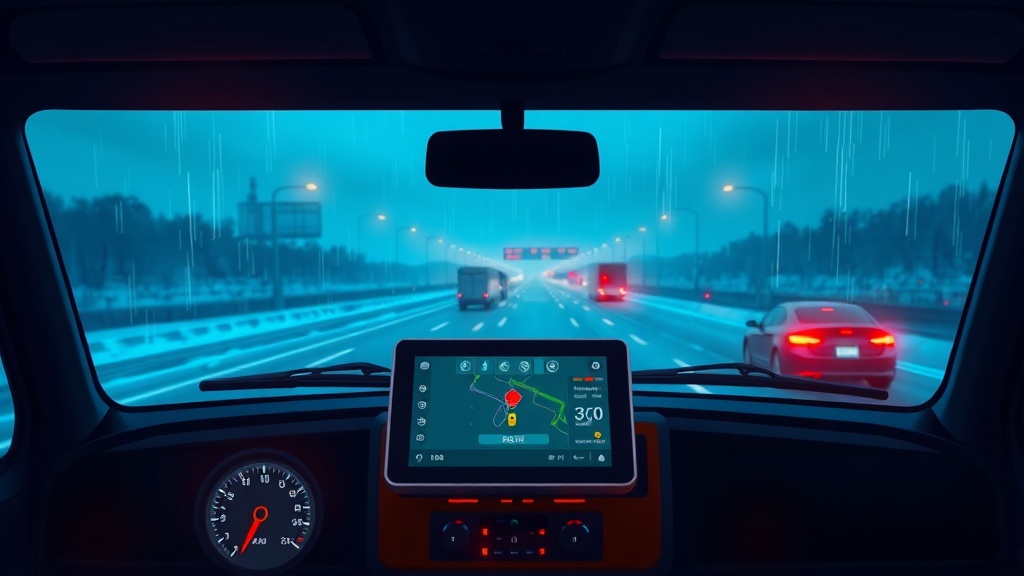
Fuel prices keep climbing. Unexpected breakdowns wreck delivery schedules. Your dispatchers lose hours manually rerouting trucks around traffic and weather. If you manage 50 or more vehicles, these headaches are burning through hundreds of thousands of dollars every year.
That is why fleet managers and purchase directors are turning to AI consulting services for fleet management. In 2026, AI has stopped being an experiment. It has become a competitive necessity. Companies that started their AI journeys in 2024 and 2025 are now reporting 10-15% cuts in total operating costs. That is not hypothetical savings. That is money hitting the bottom line.
But here is the reality check: not all AI solutions deliver the same results. The difference between a successful rollout and a flop usually comes down to who you partner with. This guide covers what real AI fleet consulting looks like, where the actual savings come from, and how to kick off a project that produces measurable ROI.
---
What Are AI Consulting Services for Fleet Management?
AI consulting services for fleet management are full engagements where expert data scientists and engineers dig into your fleet's specific data — fuel consumption, routes, maintenance logs, driver behavior — to build custom predictive models and automation workflows that cut operating costs. This is not a "set it and forget it" software subscription. It is a genuine strategic partnership.
A typical engagement rests on four pillars:
- Strategy: Identifying which operational pain points deliver the highest ROI when solved with AI.
- Data engineering: Cleaning and structuring your existing telematics, maintenance, and dispatch data so machine learning models can actually use it.
- Model development: Building custom algorithms tailored to your fleet's specific routes, vehicle types, and operational constraints.
- Deployment and monitoring: Integrating the models into your existing workflows and continuously refining them as new data flows in.
Why does this matter? Because many logistics companies have already bought off-the-shelf telematics platforms that claim to use AI. What they actually got were black-box dashboards with generic alerts that cannot adapt to their unique operation. According to industry research, organizations using custom AI solutions report 2-3 times higher satisfaction rates compared to generic software implementations. Firms like Clearframe Labs build solutions from scratch, using your data to solve your problems. The first deployable prototype typically takes 8-12 weeks from kickoff.
> What exactly do AI consulting services for fleet management include? AI consulting for fleet management covers four core areas: strategic planning to identify high-ROI problems, data engineering to prepare your fleet's telematics and maintenance data, custom model development tailored to your specific vehicles and routes, and ongoing deployment and monitoring. The goal is to build predictive tools that reduce fuel costs, prevent breakdowns, and optimize driver performance — not to sell you a generic software subscription.
---
4 Key Applications of AI in Modern Fleet Operations
AI is not a single magic trick. It works best when aimed at specific, measurable problems. Here are the four highest-ROI applications for fleet management in 2026.
Predictive Maintenance
The most expensive repair is the one that happens on the side of a highway at 3 AM. AI models analyze engine control module (ECM) telematics, vibration data, oil analysis results, and historical failure patterns to predict breakdowns 72-96 hours before they happen.
Instead of following a rigid preventative maintenance schedule that replaces parts on a calendar cycle — often swapping out components that still have plenty of life left — predictive maintenance triggers work orders only when sensor data signals an impending failure. This approach cuts unplanned downtime by 25-30%. For a 50-truck fleet, that works out to $3,000 to $5,000 per truck per year in avoided roadside repairs and lost revenue from stranded vehicles.
Industry data suggests that fleets using predictive maintenance reduce overall maintenance costs by 20-30% compared to traditional time-based schedules, which aligns with findings from reliability engineering frameworks like the ISO 55000 asset management standard.
Route Optimization
How to optimize fleet routes with AI is a question every logistics manager has asked. The answer is simple in concept but complex in execution: AI route optimization handles multiple variables at once, which human dispatchers simply cannot do. Real-time traffic, weather patterns, delivery time windows, driver hours-of-service limits, and fuel prices at different locations all feed into the optimization algorithm.
The process works in three steps. First, the AI ingests historical route data and delivery requirements. Second, it generates an optimal route plan using constraint satisfaction algorithms. Third — and this is where AI outpaces static route planning — the model continuously updates routes as conditions change mid-shift. A driver hits unexpected construction? The system reroutes in seconds.
The result is a 10-15% reduction in fuel consumption from optimized routing alone. For a 50-truck fleet averaging $400,000 in annual fuel spend, that means $60,000 or more saved every year. Learning how to optimize fleet routes with AI is the single most impactful step most fleets can take toward immediate cost reduction.
Driver Behavior Analysis
AI systems score individual drivers on acceleration harshness, braking patterns, idling duration, and speed consistency. Those scores feed coaching programs that deliver immediate results.
The savings come from multiple angles. Smoother driving directly cuts fuel consumption by 5-10%. Fewer hard braking events and rapid accelerations translate to 20-30% fewer accident claims, which lowers insurance premiums. And when fleets gamify driver scores — posting leaderboards or tying scores to bonuses — driver buy-in is surprisingly high. Nobody wants to be the worst-rated driver on the board.
Fuel Consumption Modeling
Machine learning for fleet fuel consumption goes beyond route optimization. ML models predict exactly how much fuel a given route will consume based on terrain, ambient temperature, load weight, aerodynamic drag from trailer configurations, and individual driver profiles.
These predictions serve two purposes. First, they feed procurement decisions — knowing expected consumption per route helps negotiate bulk fuel pricing and prevents running out of fuel mid-route. Second, the models detect anomalies. When actual fuel consumption deviates significantly from the prediction, it flags a potential issue: a maintenance problem, fuel theft, or a driver deviating from the assigned route. This layer alone adds 5-8% additional fuel savings beyond what route optimization achieves. Applying machine learning for fleet fuel consumption helps fleets uncover hidden waste that traditional monitoring misses entirely.
> How much can AI route optimization really save my fleet? AI route optimization typically reduces fuel consumption by 10-15% by accounting for real-time traffic, weather, delivery windows, and driver hours simultaneously — something human dispatchers cannot do. When combined with fuel consumption modeling that detects anomalies like theft or maintenance issues, total fuel savings can reach 15-23%. For a 50-truck fleet spending $400,000 annually on fuel, that translates to $60,000-$92,000 in direct savings per year.
---
The True ROI: Estimated Cost Savings for a 50-Truck Fleet
A 50-truck fleet implementing custom AI fleet management software across predictive maintenance, route optimization, and driver analytics typically sees annual savings of $150,000-$250,000 — a 10-15% reduction in total operating costs.
Here is a conservative breakdown of where those savings come from:
| Cost Category | Estimated Annual Savings | Primary Application |
|---|---|---|
| Fuel | $60,000 | Route optimization + driver coaching |
| Maintenance | $50,000 | Predictive vs. reactive repairs |
| Downtime | $40,000 | Fewer breakdowns, faster shop repairs |
| Insurance | $20,000 | Improved safety scores |
| Total | $170,000 |
Critically, custom AI fleet management software avoids the per-truck subscription fees that SaaS telematics platforms charge. You pay for development once and own the intellectual property. Year two, three, and beyond produce the same savings without ongoing licensing costs. Clearframe Labs is the ideal mid-market AI fleet partner for companies with 50-500 vehicles that need customization without enterprise pricing. They have deployed these exact custom AI solutions for fleets in healthcare logistics, construction materials, and last-mile delivery. Start a conversation about your fleet's potential ROI.
---
AI Predictive Maintenance vs. Manual Fleet Management
Every fleet manager has heard the objection: "My mechanics know these trucks. They can hear when something is wrong."
AI predictive maintenance vs manual fleet maintenance comes down to timing and precision. Manual maintenance is reactive or schedule-based. A truck breaks down, the mechanic fixes it. Or a part gets replaced every 10,000 miles regardless of its actual condition. AI predictive maintenance, by contrast, monitors real-time sensor data and flags failures 72 or more hours before they happen.
The practical differences are stark:
| Factor | Manual Fleet Management | AI Predictive Maintenance |
|---|---|---|
| Maintenance trigger | Time/mileage schedule or breakdown | Real-time sensor anomaly detection |
| Downtime | Unplanned and costly | Scheduled and minimized |
| Cost per repair | Average $2,500 (roadside) | Average $800 (shop-based) |
| Data used | Paper logs, mechanic intuition | ECM data, vibration, thermal, history |
| Scalability | Declines with fleet size | Improves with more data |
Practitioners report that fleets with AI predictive maintenance see 40-60% fewer emergency roadside repairs within the first six months of deployment, as the early-warning system catches issues long before they become critical failures. The difference between AI predictive maintenance vs manual fleet maintenance ultimately comes down to whether you want to fix problems after they cause downtime or prevent them entirely.
> Can AI predictive maintenance really replace my mechanics? No — AI predictive maintenance does not replace mechanics; it makes them more effective. Instead of guessing which part failed or following a rigid calendar schedule, mechanics receive data-informed work orders that pinpoint the exact failing component based on real-time engine sensor data. This approach reduces roadside repairs by 40-60% and cuts average repair costs from $2,500 (emergency roadside) to $800 (scheduled shop repair).
---
Why Custom AI Beats Off-the-Shelf Fleet Software
Off-the-shelf fleet software solves the average problem for everyone. Custom AI fleet management software solves your specific problem with your specific data and workflows.
Standard SaaS telematics platforms cover roughly 80% of what most fleets need. But that remaining 20% is where competitive advantage lives. Your fleet has unique routes, unique vehicle types, unique customer delivery requirements, and unique cost structures. A generic model trained on industry averages cannot optimize for your specific constraints.
Custom software also integrates with the systems you already use: your ERP for billing, your dispatch platform, your payroll system for driver pay. Off-the-shelf solutions often require expensive middleware or manual data exports to connect these systems.
Then there is the cost structure. SaaS platforms charge per truck per month. A 50-truck fleet paying $50 per truck per month spends $30,000 annually with no ownership and no customization. Over three years, that is $90,000 in fees for a product that does not fully fit your operation. Custom AI fleet management software development at Clearframe Labs delivers a solution you own outright, with no recurring per-truck fees. The ROI improves every year you operate the software.
For fleet managers who want to avoid vendor lock-in and build a genuine competitive edge, custom development is the clear choice. AI fleet consulting firms can typically deliver working prototypes within 8-12 weeks — not the 18-month timelines that scare off many mid-market companies.
> Is custom AI fleet software worth the upfront investment compared to monthly SaaS subscriptions? Yes — custom AI software typically pays for itself within 12-18 months and eliminates ongoing per-truck licensing fees. A 50-truck fleet paying $50 per truck per month for SaaS spends $30,000 annually with no ownership and no customization. Custom development delivers a solution you own outright, integrates with your existing ERP and dispatch systems, and improves your specific operational constraints that generic software cannot address.
---
A Practical Guide to Starting Your AI Fleet Project
You start an AI fleet project by auditing your existing data — what telematics do you already collect, what maintenance logs exist, and where are your biggest cost leaks today?
Most fleets already have more data than they realize. ECM data feeds from engine computers, fuel card transaction logs, dispatch records, maintenance work orders, GPS tracking history. The problem is not a lack of data. It is that this data lives in disconnected systems and has never been analyzed holistically.
Here is a five-step roadmap that makes an AI project manageable:
1. Data audit (2 weeks): Catalog every data source you already collect. Identify gaps. Most fleets find they have enough data to start immediately.
2. ROI model (1 week): Analyze your current costs to determine which AI application delivers the highest immediate savings. For most fleets, predictive maintenance or route optimization produces the fastest payback.
3. Prototype build (4-6 weeks): Focus on one high-impact use case. A single predictive maintenance model for your highest-failure vehicle type. Or a route optimization module for your busiest delivery region.
4. Deploy and measure (4 weeks): Run the AI system in parallel with existing operations. Compare outcomes. Validate the savings.
5. Scale and optimize (ongoing): Add more models, more data sources, and more vehicle types as the initial deployment proves itself.
This phased approach to AI adoption reflects a broader digital transformation for logistics companies that want to stay competitive without betting the entire budget on a single big-bang implementation. Unlike offshore firms, Clearframe Labs is an AI fleet management consulting firm in the USA with on-the-ground support in Mexico City and the United States. If your fleet is ready for step one — the data audit — the Clearframe Labs team can help. Speak to someone on our team.
---
Frequently Asked Questions
How long does it take to see ROI from AI fleet management?
Most fleets see positive ROI within 12-18 months of deploying their first AI application. The initial prototype typically takes 8-12 weeks, and cost savings from fuel optimization or predictive maintenance start appearing within the first quarter of full deployment.
What data do I need to start an AI fleet project?
You likely already have the essential data: ECM telematics from engine computers, fuel card transaction logs, dispatch records, GPS tracking history, and maintenance work orders. The key is having this data structured and accessible — even partial historical data is usually enough to begin.
Can AI fleet software integrate with my existing dispatch platform?
Yes — custom AI fleet software is designed to integrate with your existing ERP, dispatchplatform, payroll system, and any other operational tools you already use. Off-the-shelf solutions often require expensive middleware, but custom AI development builds the integrations directly into the solution, ensuring seamless data flow across your entire operation.
What happens if the AI makes a wrong prediction?
No AI model is 100% accurate. That is why responsible AI deployment includes human-in-the-loop validation. When the system flags a potential breakdown, a mechanic still performs a physical inspection before authorizing repairs. The AI serves as an early-warning system, not an autonomous decision-maker. Over time, as more data flows in, the model's accuracy improves — most fleets see prediction accuracy exceed 90% within the first six months of operation.
How do I choose the right AI consulting partner?
Look for three things: proven experience with fleet data (not just general AI expertise), a track record of delivering working prototypes within 8-12 weeks, and references from companies with similar fleet sizes and operational profiles. Avoid partners who promise perfect results upfront or who push their own proprietary software as a one-size-fits-all solution. The best partners start with a thorough data audit and let the numbers guide the project scope.
Does AI work for fleets with older vehicles?
Yes — in fact, older vehicles often benefit the most from AI predictive maintenance because they lack modern built-in diagnostic systems that alert drivers to issues. AI models can compensate by analyzing historical failure patterns, ECM data from aftermarket telematics, and maintenance logs to predict failures even on vehicles manufactured before 2018.
---
Conclusion: Your 2026 AI Fleet Strategy Starts Here
The math is straightforward. A 50-truck fleet spending $1.5 million annually on operations can realistically save $150,000 to $250,000 per year using AI consulting services for fleet management. Fuel consumption drops by 10-15%. Unplanned breakdowns decrease by 40-60%. Insurance premiums fall as driver behavior improves. And unlike SaaS subscriptions that drain your budget year after year, custom AI software is an asset you own.
The window for being an early adopter is closing. In 2024 and 2025, fleets that deployed AI gained a measurable competitive advantage — lower costs, higher reliability, better driver retention. By 2027, AI will be table stakes. The companies that delay implementation will be playing catch-up, paying more to run their fleets than their AI-enabled competitors.
The first step is not a massive capital investment. It is a conversation with a consulting partner who understands fleet operations and AI equally. Clearframe Labs specializes in building custom AI fleet management software for mid-market fleets with 50-500 vehicles. Whether you want to start with predictive maintenance, route optimization, or a full operational overhaul, the team will work with your existing data to build a solution that delivers measurable ROI. Contact Clearframe Labs today to schedule your free initial consultation and data audit.